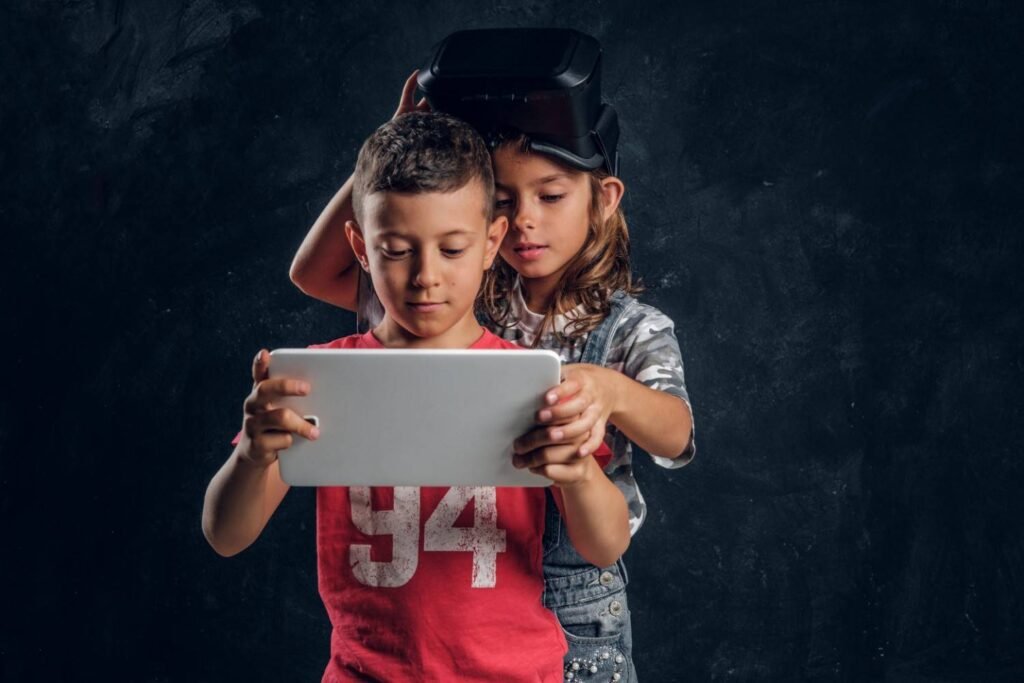
Children do more than watch stories. They study the characters, notice who receives respect, and learn which actions bring rewards or consequences. Understanding how media representation affects children therefore requires looking beyond screen time.
Movies, television, books, advertisements, video games, YouTube, and social media can shape a child’s self-worth, social values, behavior, and expectations about American life.
I see media as one influence among many, not a force that automatically determines behavior. Families, schools, communities, and personal experiences also matter. Still, repeated portrayals can become powerful lessons, especially when children have limited real-world contact with the people being depicted.
Why Do Children Copy Behaviors They See in Media?
Psychologist Albert Bandura’s Social Learning Theory helps explain media’s influence. The theory proposes that children learn by observing models, remembering what they do, and noticing whether their behavior receives a reward or punishment. Children may then imitate actions that appear successful, admired, or consequence-free.
Onscreen characters can become social models. A hero who solves every disagreement through violence may normalize aggression, while a character who resolves conflict through communication can model patience and empathy. The child will not copy everything, but repetition, identification with the character, and visible rewards can make a message more influential.
How Does Representation Shape Identity and Self-Esteem?
Rudine Sims Bishop’s “mirrors, windows, and sliding glass doors” framework offers a useful way to understand diverse children’s media. Stories act as mirrors when children recognize their own identities and experiences. They become windows when children observe lives different from their own and sliding doors when stories invite them to enter those experiences imaginatively.
When children see people who share their race, culture, disability, religion, body type, language, or family structure portrayed as complex and capable, they receive confirmation that people like them belong. Positive representation can support cultural pride, self-esteem, educational ambitions, and confidence about the future.
A lack of representation sends its own message. Children who rarely see themselves—or appear only as background characters—may feel invisible or less important. Consistently negative portrayals can deepen that sense of otherness and teach children to associate their identity with narrow social limits.
How Do Media Stereotypes Affect Children’s Beliefs?
The clearest answer to how media representation affects children appears in the assumptions they form about themselves and other people. Repeated stereotypes can make fictional patterns feel like social facts.
Traditional gender portrayals often present boys as aggressive, emotionally distant, or naturally skilled with technology. Girls may appear passive, appearance-focused, nurturing, or dependent on male characters. These messages can restrict emotional expression, shape relationship expectations, and influence which careers children consider appropriate for them.
Racial representation carries similar consequences. For children in culturally homogeneous communities, entertainment may provide much of their exposure to other racial and ethnic groups. If those portrayals repeatedly connect one community with crime, poverty, foreignness, or comic relief, children may develop implicit bias and carry it into classrooms, friendships, and adult life.
Better representation does not require flawless minority characters. It requires varied characters with agency, relationships, ambitions, strengths, and ordinary imperfections. One diverse character cannot represent an entire community.
Can Media Representation Influence Career Aspirations?
Children use visible role models to imagine what they might become. Seeing women as engineers, Black characters as doctors, Latino characters as business leaders, or disabled characters as teachers and artists can expand a child’s view of achievement.
The opposite pattern can quietly restrict ambition. When certain groups appear primarily as helpers, victims, villains, or sidekicks, children may associate leadership and professional success with someone else.
Research summarized by the Children’s Health Council indicates that deeply ingrained media stereotypes can affect children’s career choices, self-worth, relationships, and ability to reach their potential.
Representation therefore matters beyond immediate confidence. It can influence a child’s real-world expectations, educational interests, and willingness to imagine entering spaces where people like them have historically remained less visible.
How Does Media Affect Children’s Body Image and Physical Health?
American children regularly encounter edited faces, filtered social media posts, thin beauty ideals, and hyper-muscular bodies. When entertainment presents these images as normal, young viewers may compare themselves with standards that are staged, digitally altered, or difficult to achieve.
Girls may learn that appearance determines social value, while boys may feel pressured to become muscular, tall, and emotionally tough. Children in larger bodies often see characters like them treated as lazy, unhealthy, unattractive, or useful only for comedy. These portrayals can contribute to body dissatisfaction, shame, unhealthy eating habits, and anxiety.
Media habits can affect physical well-being in other ways. Long periods of passive screen use may replace sleep, exercise, and face-to-face activity. The content matters, but so do the amount of exposure and the routines surrounding it.
How Do Advertising and Influencers Shape Children’s Values?
Young children may not fully understand that advertising intends to persuade them. Toy commercials, fast-food marketing, branded entertainment, and influencer promotions can make products appear essential to happiness, popularity, or belonging.
This commercial messaging may encourage materialism, unhealthy food preferences, repeated purchase requests, and family conflict. On social media, the line between personal recommendation and paid promotion can become especially difficult to recognize.
Parents can help by asking who created a message, what it wants the viewer to feel, and what action it wants them to take. These simple questions build advertising literacy and help children separate personal value from possessions.
Does Onscreen Violence Normalize Aggressive Behavior?
Violence often appears exciting, heroic, or free of lasting consequences. Nemours KidsHealth notes that children who watch onscreen violence may show more aggressive behavior or develop greater fear about the world around them. Younger children are particularly vulnerable because they may struggle to distinguish fantasy from reality.
The context of violence matters. A story that shows pain, accountability, and peaceful alternatives communicates something different from one that treats harm as entertaining. Repeated consequence-free violence can desensitize viewers and make aggression appear like an acceptable way to solve problems.
Parents should also pay attention to glamorized smoking, alcohol, substance use, and sexual behavior. If shows portray these actions as universal, risk-free, or socially rewarding, adolescents may form unrealistic ideas about safety and peer expectations.
How Can Positive Representation Build Empathy?
Diverse stories help children understand people they may not regularly meet. Accurate portrayals of race, immigration, disability, religion, economic hardship, and different family structures can replace abstract labels with human experiences.
Positive representation can encourage curiosity, compassion, and respectful cross-cultural relationships. However, visibility alone is not enough. Token characters who lack personality or influence may create the appearance of inclusion without delivering authentic representation.
Children benefit most when characters from underrepresented communities drive the story, make meaningful decisions, and exist beyond a single identity-based struggle. Authenticity also improves when creators, writers, and performers from those communities help shape the narrative.
How Can Parents Help Children Understand Media Messages?
I recommend co-viewing whenever possible, particularly with younger children. Parents can ask whether a character was treated fairly, who solved the problem, whose perspective was missing, and whether the story relied on a stereotype.
A varied media diet also matters. One program cannot reflect every American experience, but a collection of stories can introduce children to different races, cultures, abilities, bodies, neighborhoods, and family structures.
Parents should consider the child’s age because preschoolers interpret stories more literally, while teenagers respond strongly to messages about appearance, status, relationships, and belonging.
The goal is not to find perfect media or turn every movie into a lecture. Open, age-appropriate conversations teach children to question messages without taking away their enjoyment.
Frequently Asked Questions (FAQs)
1. Why is representation important in children’s media?
Representation helps children develop identity, belonging, empathy, and expectations about their future. It also introduces them to people and experiences beyond their immediate communities.
2. What are the negative effects of poor media representation?
Poor representation can reinforce racial and gender stereotypes, lower self-worth, restrict career aspirations, encourage body dissatisfaction, and normalize biased or risky behavior.
3. What is the difference between representation and tokenism?
Representation gives characters depth, agency, relationships, and influence over the story. Tokenism adds a marginalized character mainly to create the appearance of diversity.
4. How can parents teach children media literacy?
Parents can watch content with their children, discuss stereotypes, explain advertising, compare fictional behavior with real consequences, and encourage children to question whose perspective a story includes or excludes.
Building a Healthier Media World for Children
When I consider how media representation affects children, I return to one central idea: visibility shapes possibility. Diverse, thoughtful portrayals, including responsible autism representation in movies and television, can build belonging, empathy, emotional freedom, and ambition. Stereotypes, exclusion, materialism, and glamorized risks can create limits that follow children into real life.
Parents and educators cannot control every image children encounter, but they can teach young people how to interpret those images. By choosing richer stories, discussing harmful portrayals, and supporting authentic voices, we can help children see both themselves and others as fully human.