Award-winning films do not succeed through acting and direction alone. Their images decide what feels intimate, threatening, romantic, or unforgettable. When I reviewed the women cinematographers behind award-winning movies, I found a history shaped by delayed recognition and bold visual invention.
The real story is not simply that women entered major cinematography categories. It is how their choices in light, lenses, format, framing, and movement changed films that later earned Oscars, festival prizes, and industry honors.
Why These Award Milestones Matter
A cinematographer controls the audience’s visual relationship with a character. Camera distance can create trust or suspicion. Lighting can reveal emotion or hide it. Movement can turn a room into a refuge or a trap.
The Academy’s record shows how recent change is. Rachel Morrison became the first woman nominated for the cinematography Oscar in 2018. Ari Wegner followed in 2022, Mandy Walker in 2023, and Autumn Durald Arkapaw in 2026. Arkapaw then became the first woman to win. She was also the first woman of color nominated.
My original finding is striking: all four female Oscar cinematography nominees appeared within nine ceremonies. That signals progress, but it also shows how new this recognition remains for women cinematographers behind award-winning movies.
Quick Reference: Cinematographers, Films, and Recognition
| Cinematographer | Defining film | Major recognition | Visual strength |
| Autumn Durald Arkapaw | Sinners | 2026 cinematography Oscar winner | Large-format scale with warmth |
| Rachel Morrison | Mudbound | First woman nominated for the Oscar | Earthy realism and intimacy |
| Ari Wegner | The Power of the Dog | Second woman nominated for the Oscar | Psychological landscapes |
| Mandy Walker | Elvis | Oscar nominee and historic ASC winner | Kinetic performance imagery |
| Hélène Louvart | Never Rarely Sometimes Always | Spirit Award cinematography nominee | Naturalistic restraint |
| Ellen Kuras | Eternal Sunshine of the Spotless Mind | Shot an Oscar-winning film | Memory-driven lighting |
| Maryse Alberti | The Wrestler | Shot the Venice Golden Lion winner | Documentary immediacy |
| Charlotte Bruus Christensen | The Hunt | Shot a Cannes-honored drama | Precise tension building |
These milestones are confirmed by the Academy, ASC, Film Independent, Venice, and Cannes records.
Women Who Changed the Oscar Cinematography Record
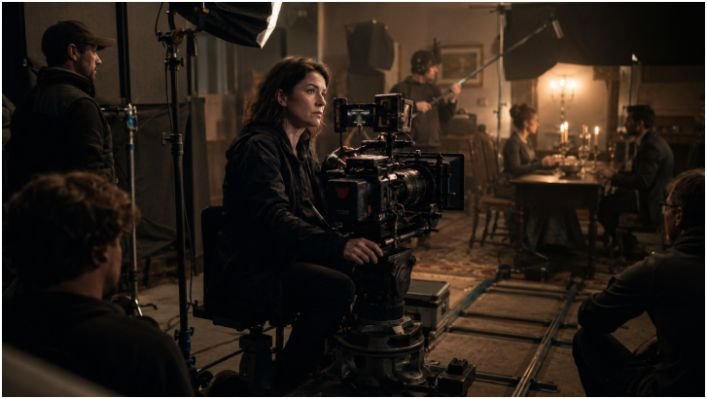
The most visible breakthroughs for women cinematographers behind award-winning movies came through four very different visual styles.
Autumn Durald Arkapaw
Autumn Durald Arkapaw photographed Ryan Coogler’s Sinners using 5-perf and 15-perf 65mm film, Ultra Panatar anamorphic lenses, and modified IMAX lenses. The format creates scale, yet faces still feel immediate and emotionally warm.
At the 98th Academy Awards on March 15, 2026, she became the first woman to win Best Cinematography. Her victory made her the clearest modern milestone among women cinematographers behind award-winning movies.
Rachel Morrison
Rachel Morrison broke the nomination barrier with Mudbound in 2018. The Academy also identifies her as the first woman to shoot a Marvel superhero feature through Black Panther.
In Mudbound, weather, skin, labor, and land carry dramatic weight. Morrison avoids polished nostalgia. Her earthy images make history feel physical, uncomfortable, and close.
Ari Wegner
Ari Wegner became the second woman nominated for the cinematography Oscar for The Power of the Dog. Its landscapes, doorways, and shadows create pressure before characters speak.
The film won BAFTAs for Best Film and Director, but Dune won BAFTA Cinematography. Wegner was a nominee, not the category winner. This correction matters when documenting women cinematographers behind award-winning movies accurately.
Mandy Walker
Mandy Walker earned an Oscar nomination for Elvis and became the first woman to win the ASC feature-film cinematography award.
Her camera mirrors the rush of live performance through movement, changing formats, bold color, and heightened angles. Walker proves female directors of photography cannot be reduced to intimate or naturalistic styles. She handles spectacle with speed and clarity.
Female Directors of Photography Behind International Winners
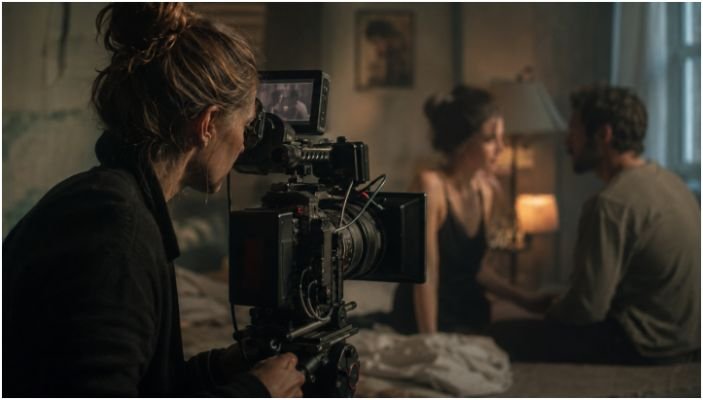
The influence of women cinematographers behind award-winning movies extends beyond prizes awarded directly for cinematography.
Hélène Louvart and Ellen Kuras
Hélène Louvart photographed Never Rarely Sometimes Always with close, observational restraint. Film Independent nominated her for Best Cinematography, while Sundance gave the film a special jury prize. Her camera registers vulnerability without turning it into spectacle.
Louvart also shot Happy as Lazzaro, which shared Cannes’ Best Screenplay prize.
Ellen Kuras used practical lighting and controlled transitions to make Eternal Sunshine of the Spotless Mind feel emotionally unstable. The film won the Oscar for Original Screenplay. The ASC praises Kuras for visualizing emotional and psychological landscapes.
Maryse Alberti and Charlotte Bruus Christensen
Maryse Alberti brought documentary immediacy to The Wrestler, which won the 2008 Venice Golden Lion. Her handheld closeness makes the audience feel trapped beside its bruised central character.
Her colorful work on Velvet Goldmine shows her range. The film received Cannes’ artistic contribution prize in 1998.
Charlotte Bruus Christensen turns precise framing into tension. In The Hunt, ordinary rooms become threatening as the community isolates its central character. Cannes honored the film with Best Actor and the Vulcain Prize. Her later work on Fences and A Quiet Place applies that control to drama and horror.
What Women Cinematographers Behind Award-Winning Movies Share
I see no single visual formula linking these women cinematographers behind award-winning movies. Calling their work one “female gaze” would flatten eight individual careers.
Their shared strength is more useful: each matches technique to character. Arkapaw uses scale without coldness. Morrison makes texture carry history. Wegner turns landscape into subtext. Walker makes spectacle serve performance. Louvart protects intimacy. Kuras bends reality around memory. Alberti creates physical immediacy. Christensen makes composition feel dangerous.
Viewers and emerging filmmakers can use one practical test: do not ask whether a frame looks beautiful. Ask what visual problem the story needed to solve, then study how the camera solved it.
The Camera Was Never the Side Note
The women cinematographers behind award-winning movies did more than add attractive images to celebrated productions. They shaped how audiences experienced grief, desire, fear, memory, performance, and power.
My next step is delightfully simple: rewatch one featured film with the sound low for ten minutes. Notice camera distance, light direction, lens changes, and movement. The story will still speak. That is the cinematographer claiming her rightful close-up.
Frequently Asked Questions
1. Who was the first woman to win the Oscar for Best Cinematography?
Autumn Durald Arkapaw became the first woman to win for Sinners at the 98th Academy Awards in 2026.
2. Who was the first female cinematographer nominated for an Oscar?
Rachel Morrison became the first woman nominated for Mudbound at the 2018 Academy Awards.
3. Which female cinematographers worked on major award-winning films?
Key names include Arkapaw, Morrison, Wegner, Walker, Louvart, Kuras, Alberti, and Christensen.
4. Why are women cinematographers behind award-winning movies important?
They expanded cinema’s visual language while challenging a long record of limited recognition in major craft categories.