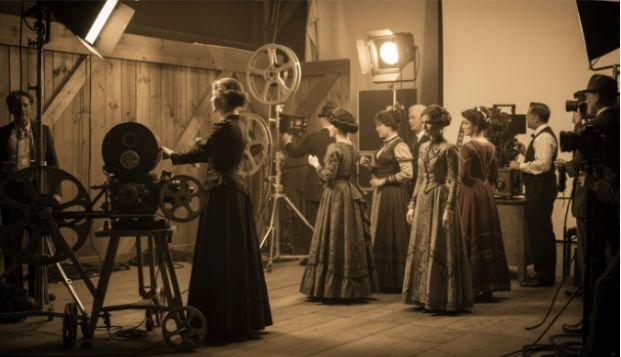

Hollywood has always been fascinated by people arriving in America, but it has not always portrayed them fairly. Early films often turned newcomers into comic novelties, suspicious outsiders, or symbols of forced assimilation.
Today, immigrant representation in American movies increasingly explores cultural identity, legal uncertainty, family expectations, and the emotional cost of pursuing the American Dream. The progress is meaningful, yet authentic inclusion still depends on who gets to control the story.
How Did Early American Movies Portray Immigrants?
Immigration became a cinematic subject during the silent era, when many immigrants were also part of America’s growing moviegoing audience. Charlie Chaplin’s The Immigrant (1917) combined physical comedy with pointed social criticism. Its famous arrival sequence shows officials handling newcomers roughly, reflecting the loss of dignity that could accompany entry into the United States.
Still, many early productions relied on exaggerated accents, ethnic clothing, misunderstandings, and physical humor. Immigrants often appeared unfamiliar or socially inferior rather than fully developed. These depictions mirrored the nativist attitudes of their eras and helped establish the immigrant-as-outsider trope.
During the 1920s and later decades, assimilation became a dominant theme. Hollywood frequently suggested that newcomers could earn acceptance by speaking English, adopting mainstream customs, and putting their heritage behind them. The American Dream appeared attainable, but only after cultural compromise.
How Did Crime Movies Shape Immigrant Stereotypes?
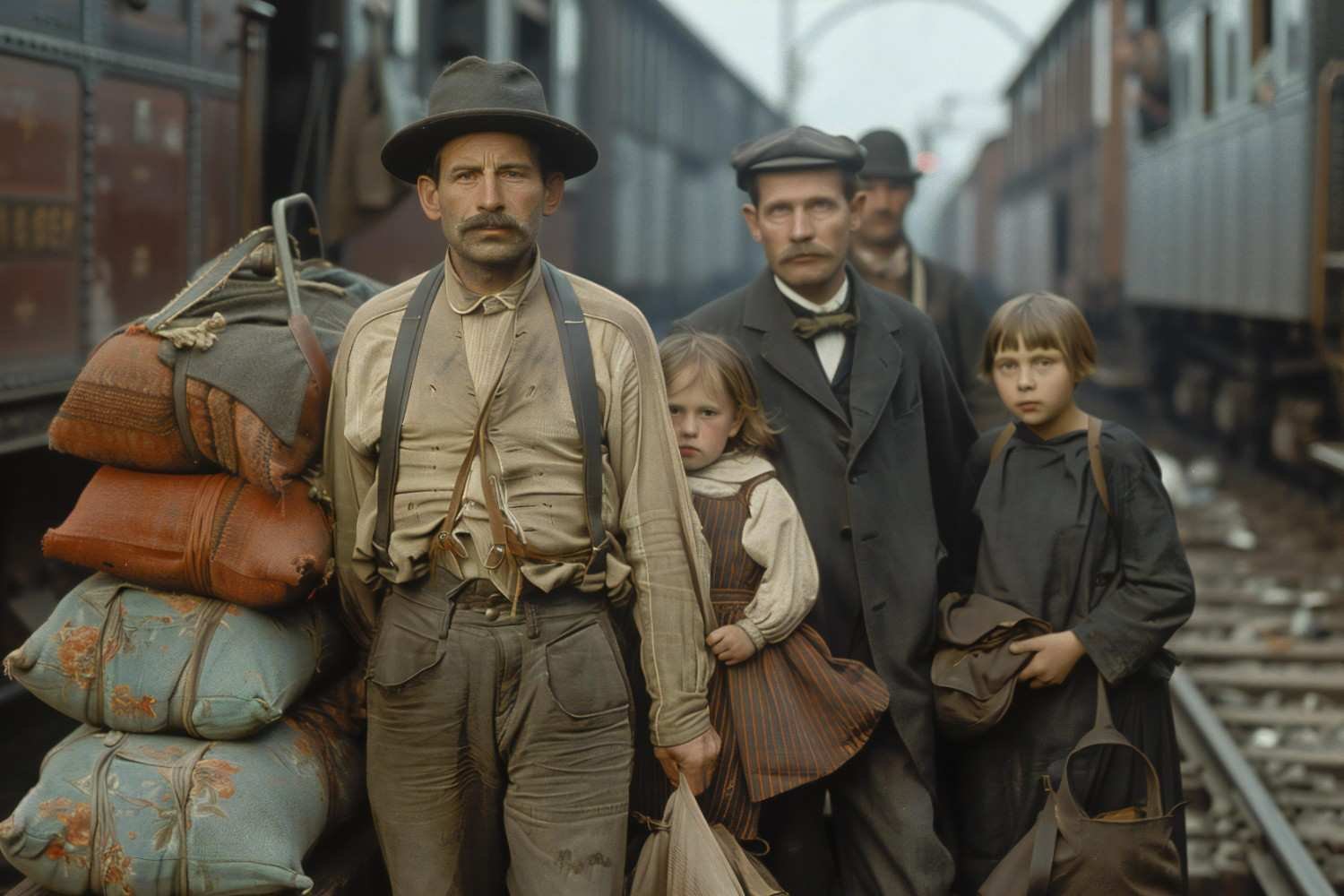
From the studio era through the 1970s, Hollywood often placed immigrant characters inside isolated ethnic neighborhoods. Crime films were particularly influential, associating immigrant survival with gangs, corruption, and organized crime.
The Godfather Part II (1974) offers a more sophisticated example. The film contrasts young Vito Corleone’s arrival from Sicily with his gradual rise in New York’s criminal world. Rather than presenting crime as an inherited ethnic trait, the story connects it to poverty, exclusion, power, and a distorted form of assimilation.
Even nuanced masterpieces can shape popular stereotypes. The enormous cultural influence of gangster films strengthened the association between Italian Americans and the Mafia. Hollywood later repeated similar patterns by portraying Latino immigrants as gang members, Middle Eastern immigrants as security threats, and Eastern Europeans as criminals.
The problem is not that movies portray immigrant characters committing crimes. It emerges when criminality becomes the primary story American audiences see about an entire community.
When Did Immigrant Movies Begin Telling More Personal Stories?
The independent filmmaking wave of the 1980s, 1990s, and 2000s shifted attention from criminal organizations to ordinary families, cultural memory, and systemic barriers.
The Joy Luck Club (1993) examines relationships between Chinese immigrant mothers and their American-born daughters. The women’s disagreements reveal how sacrifice, trauma, language, and cultural expectations can create emotional distance across generations.
The Namesake (2006) similarly portrays an Indian couple building a life in New York while their American-born son struggles with his name, heritage, and sense of belonging. The film refuses to frame identity as a simple choice between being Indian or American.
Other productions focused on the US immigration system. The Visitor follows a Syrian musician facing detention and deportation in post-9/11 America. A Better Life centers on an undocumented Los Angeles gardener trying to protect his son while living with the constant possibility of removal. Both movies give legal policy a human scale without reducing their characters to case numbers.
Why Do Modern Immigration Films Feel More Authentic?

Modern filmmakers increasingly draw from personal, family, and diasporic experiences. This shift has produced culturally specific stories that move beyond border crossings and arrival scenes.
Minari (2020) follows a Korean American family attempting to build a farm in rural Arkansas. Financial pressure, marriage, faith, language, food, and family disagreements shape the story. Immigration matters, but the characters have desires and flaws beyond their immigrant status.
Brooklyn captures the loneliness and divided allegiance of an Irish woman who creates a new life in 1950s New York. The Farewell explores the emotional complexity of moving between American and Chinese cultural expectations. The Big Sick uses romantic comedy to examine Pakistani American identity, interracial relationships, and parental pressure.
The Brutalist (2024) expands the conversation by examining displacement, professional exploitation, trauma, and reinvention through the life of a Hungarian Jewish architect in postwar America. It challenges the idea that reaching the United States automatically completes an immigrant’s journey.
Meanwhile, Problemista uses surreal comedy to expose the absurdity of employment sponsorship and the US work-visa system. Together, these films show how immigrant representation in American movies has moved toward personal perspectives and narrative forms that immigrants help shape themselves.
How Do Animated Movies Explore Immigrant Family Experiences?
Some animated films work as immigrant allegories even when they do not portray US immigration literally. Pixar’s Elemental presents a family that leaves its original home, builds a business in a new city, and expects its daughter to preserve its traditions. The film reflects cultural adaptation, prejudice, language difference, and second-generation pressure.
Disney’s Encanto centers on a Colombian family displaced by violence. It explores inherited trauma, family obligation, and the burden placed on younger generations to justify earlier sacrifices. Although it is not an American immigration narrative, many immigrant families recognize its themes of displacement and intergenerational responsibility.
These films introduce young audiences to complicated experiences through accessible fantasy. However, studios should not use allegory as a substitute for direct stories about diverse immigrant communities.
Why Does Immigrant-Led Storytelling Matter in Hollywood?

Authenticity starts long before casting. Writers, directors, producers, editors, and studio executives determine whose perspective guides a movie. A production can feature immigrant characters while still relying on an outsider’s stereotypes.
Creators with lived experience may notice details that superficial research misses, from family interactions and code-switching to artificial accents and cultural rituals. However, no filmmaker can represent every person from one country or diaspora. Hollywood needs many different immigrant stories so that one character never carries the burden of representing an entire population.
The industry must also embrace intersectionality. Nationality, race, class, religion, gender, sexuality, disability, generation, and legal status all shape immigrant life. Terms such as “Asian,” “Latino,” “African,” and “Middle Eastern” cannot capture the diversity within those communities.
Frequently Asked Questions (FAQs)
1. How has immigrant representation in American movies changed?
It has moved from silent-era caricatures and assimilation narratives toward more personal stories about identity, legal status, family tension, displacement, and belonging. Modern films also give more creative authority to immigrant and diasporic filmmakers.
2. What stereotypes do Hollywood movies use about immigrants?
Common stereotypes include the criminal immigrant, helpless refugee, suspicious foreigner, strict parent, silent laborer, and comic character defined by an exaggerated accent.
3. Which movies portray immigrant experiences authentically?
Frequently discussed examples include Minari, The Namesake, The Joy Luck Club, Brooklyn, A Better Life, The Visitor, The Farewell, and Problemista. No single film represents every immigrant experience.
4. Why do immigrant stories matter in American cinema?
They can influence how audiences understand cultural identity, assimilation, legal status, and belonging. Nuanced portrayals also challenge simplified political narratives and harmful stereotypes.
What Must Hollywood Improve About Immigrant Representation?
American movies still focus heavily on border conflict, undocumented status, suffering, and forced assimilation. These subjects deserve attention, but they represent only part of immigrant life. Understanding representation versus tokenism in media helps explain why simply including immigrant characters does not guarantee meaningful storytelling.
Hollywood needs more immigrant characters in romance, science fiction, horror, workplace comedy, family adventure, and other genres where immigration is not the entire plot. Immigrants should be allowed to be ordinary, ambitious, selfish, funny, successful, struggling, heroic, or flawed.
I believe progress will become lasting when Hollywood stops treating immigrants as symbols and starts trusting them as storytellers. The best films do not ask viewers to pity or idealize newcomers. They reveal complicated people whose experiences form an essential part of America’s past and present.