When I rewatch Jaws, Raging Bull, or Pulp Fiction, I notice that the strongest emotion often arrives between shots. Fear, impact, and surprise come from the decision to cut.
That is why the women film editors who shaped modern cinema deserve more than a line in the credits. They built suspense, repaired structure, sharpened performances, and created rhythms that later filmmakers adopted. Their work proves that editing is not cleanup after filming. It is the movie’s final rewrite.
Why Women Became Central to Early Film Editing
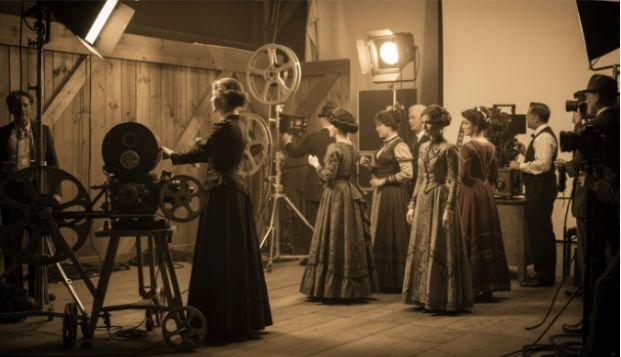
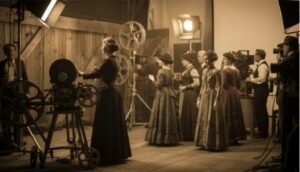
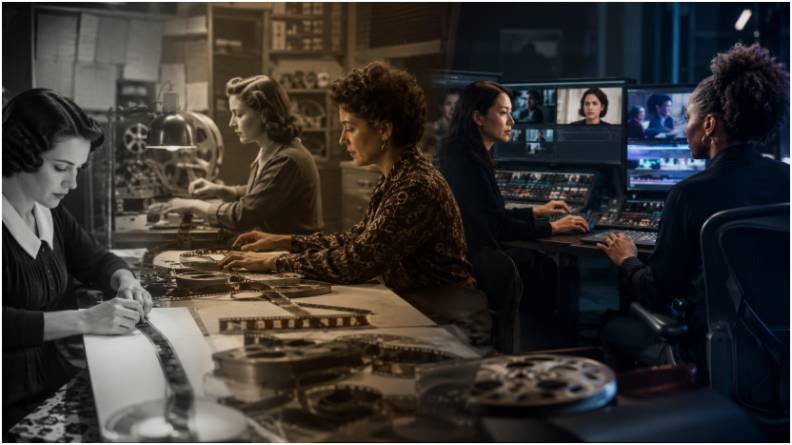
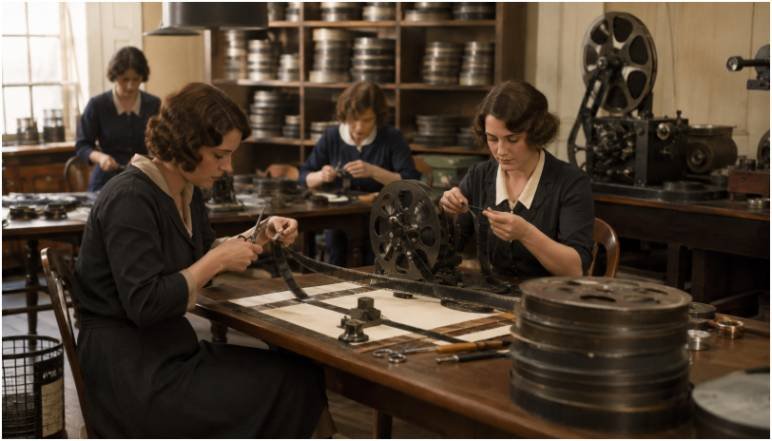
During the silent era, studios often treated cutting and joining film as repetitive handwork. The task was compared with sewing, so women frequently staffed editing rooms while men held more visible production roles. Columbia University’s Women Film Pioneers Project documents that several women became major editors despite limited public recognition.
The women film editors who shaped modern cinema did not simply enter an established profession. They helped define its grammar. They learned how long to hold a face, when to remove a pause, and how to guide viewers through space.
The Grandmothers Who Turned Cutting Into Cinema
Margaret Booth Made Editing a Position of Authority
Margaret Booth began when editors were still called cutters. Film historian Cari Beauchamp credits MGM production chief Irving Thalberg with using the elevated title “film editor” for Booth. She later served as MGM’s supervising editor for decades, influencing many films beyond her individual credits.
The Academy honored Booth for her exceptional contribution to film editing. Her career helped transform editorial judgment into studio authority.
When I examine Booth’s career, her influence seems larger than any single movie. A supervising editor must identify weak pacing, confusing continuity, and ineffective performances across entire productions.
Anne Bauchens Brought Clarity to Epic Scale
Anne Bauchens maintained a decades-long collaboration with Cecil B. DeMille. She was nominated for Cleopatra and won for North West Mounted Police, becoming the first woman to win the Film Editing Oscar.
Her work shows why spectacle still needs precision. Crowds, action, and huge sets can overwhelm a narrative. Bauchens organized that scale into clear dramatic movement.
Her place among the women film editors who shaped modern cinema rests on making epic filmmaking easy to follow. She ensured that size supported the story rather than burying it.
The Modernists Who Changed American Film Rhythm
Dede Allen Made Disruption Feel Meaningful
Dede Allen brought a modernist pulse into mainstream American cinema. The British Film Institute notes that Bonnie and Clyde introduced French-influenced editing ideas to US filmmaking. Allen used abrupt transitions, overlapping sound, and unstable rhythms to express character tension.
When I watch the film, its movement from comedy to violence feels almost physically dangerous. The rhythm changes before viewers can become comfortable.
Among the women film editors who shaped modern cinema, Allen proved that a rough transition could reveal a smoother truth about character. She made disruption emotionally coherent rather than merely fashionable.
Verna Fields Turned Absence Into Terror
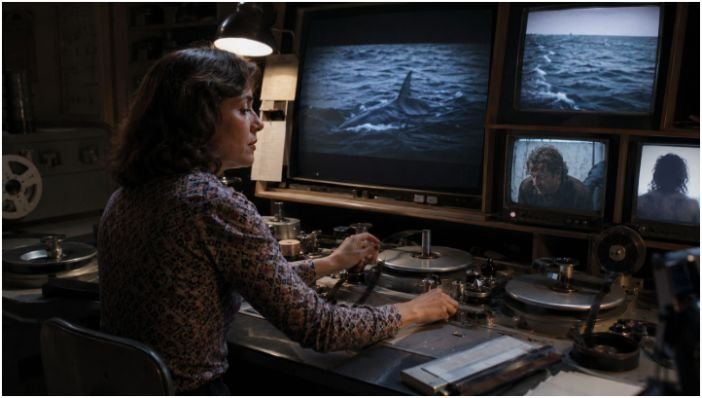
Verna Fields won the Film Editing Oscar for Jaws. The production struggled with unreliable mechanical sharks, so Steven Spielberg’s team used editing and camera choices to limit what viewers saw. The result became a landmark of blockbuster filmmaking.
Fields built dread through delayed information, reaction shots, false alarms, and tightening intervals. In the beach sequence, the editing makes us scan faces, water, movement, and Chief Brody’s reactions.
The audience searches the frame before the shark appears. Fields shows how the women film editors who shaped modern cinema could turn a production problem into a defining creative advantage.
The broken shark did not automatically create suspense. Fields created suspense by deciding exactly when the audience could—and could not—see the threat.
The Editors Behind Pop-Culture Landmarks
Marcia Lucas Gave Star Wars Emotional Urgency
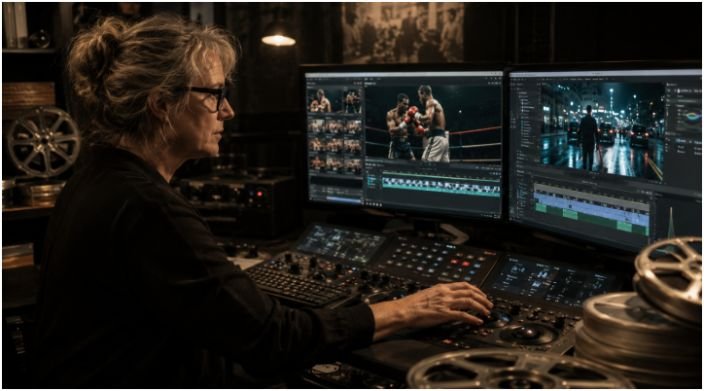
Marcia Lucas shared the 1978 Film Editing Oscar for Star Wars with Paul Hirsch and Richard Chew. The Academy’s record confirms the three-way win.
It is too simple to say that one editor “saved” the film. The stronger lesson is that the editing team made a technically complex story urgent and readable.
Parallel cutting during the final assault keeps several actions clear while the countdown intensifies. The audience can follow the pilots, the command center, the approaching danger, and Luke’s emotional decisions.
Lucas also protected small character reactions. Those pauses help the spectacle feel personal. This balance between machinery and emotion remains central to blockbuster editing.
Thelma Schoonmaker Made Rhythm Psychological
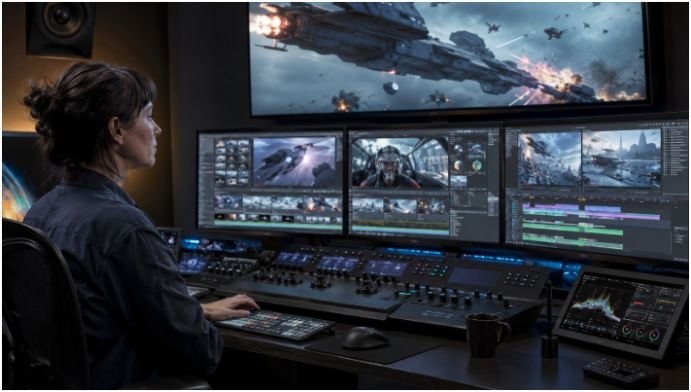
Thelma Schoonmaker won Oscars for Raging Bull, The Aviator, and The Departed. Her ninth nomination, for Killers of the Flower Moon, established the record for the most Film Editing nominations.
In Raging Bull, changes in speed, sound, framing, and shot length place viewers inside Jake LaMotta’s unstable perception. The boxing ring becomes a mental space rather than a neutral arena.
The women film editors who shaped modern cinema often turned technique into psychology. Schoonmaker offers one of the clearest examples.
Her most aggressive sequences still contain control. She allows silence and stillness to interrupt kinetic passages, making the next impact feel harder.
Sally Menke Controlled Tarantino’s Expansive Energy
Sally Menke edited every Quentin Tarantino feature from Reservoir Dogs through Inglourious Basterds. She received Oscar nominations for Pulp Fiction and Inglourious Basterds.
Menke knew when to let dialogue stretch, when to interrupt chronology, and when music should carry a transition. Pulp Fiction feels free-form, yet its episodes remain controlled.
That discipline places Menke among the women film editors who shaped modern cinema. She helped turn nonlinear storytelling, long conversations, and sudden genre changes into accessible pop culture.
Editing also depends on the images available in the cutting room. That relationship becomes clearer when studying women cinematographers behind award-winning movies.
My Three-Question Test for Seeing an Editor’s Work
I use a simple method when comparing famous scenes:
- What does the cut make me expect?
- What does the cut make me feel?
- What does the cut help me understand?
In Jaws, the cuts make us expect an attack, feel trapped in Brody’s vigilance, and understand that danger may enter from anywhere.
In Star Wars, cross-cutting makes us expect time to run out. It creates pressure while explaining several simultaneous actions.
In Pulp Fiction, the rearranged timeline produces surprise. It also changes how we judge characters after later revelations.
This is my original lens for studying the women film editors who shaped modern cinema. It shifts attention away from counting cuts and toward measuring audience experience.
A scene does not succeed because it contains many edits. It succeeds because every edit changes expectation, emotion, or understanding.
Quick Legacy Comparison
The women film editors who shaped modern cinema each controlled attention differently.
| Editor | Signature Contribution | Defining Film |
| Margaret Booth | Editorial supervision and classical clarity | Camille |
| Anne Bauchens | Large-scale narrative control | North West Mounted Police |
| Dede Allen | Psychological cuts and sound overlaps | Bonnie and Clyde |
| Verna Fields | Suspense through delayed visibility | Jaws |
| Marcia Lucas | Parallel action with emotional stakes | Star Wars |
| Thelma Schoonmaker | Kinetic, subjective character rhythm | Raging Bull |
| Sally Menke | Nonlinear, music-driven narrative control | Pulp Fiction |
Frequently Asked Questions
1. Who was the first woman to win an Oscar for film editing?
Anne Bauchens won for North West Mounted Police at the 1941 Academy Awards ceremony.
2. Which woman edited Jaws?
Verna Fields edited Jaws and won the Academy Award for Film Editing for her work.
3. Why is Thelma Schoonmaker important to cinema?
She made editing a powerful tool for character psychology through her influential collaboration with Martin Scorsese.
4. How did women film editors who shaped modern cinema influence today’s movies?
They advanced suspense, nonlinear structure, parallel action, sound overlap, and emotionally driven pacing.
The Final Cut Deserves the Spotlight
The women film editors who shaped modern cinema did more than shorten scenes or connect shots. They decided when audiences should breathe, worry, laugh, or look away.
Their influence remains visible in action movies, nonlinear dramas, psychological character studies, and modern blockbusters. Yet the best editing rarely demands attention for itself. It directs attention toward the story.
My best tip is simple: rewatch one famous scene without focusing on dialogue. Study reaction shots, sound bridges, pauses, and viewpoint changes.
Once you notice those choices, the editor stops being invisible—and the movie becomes much richer.