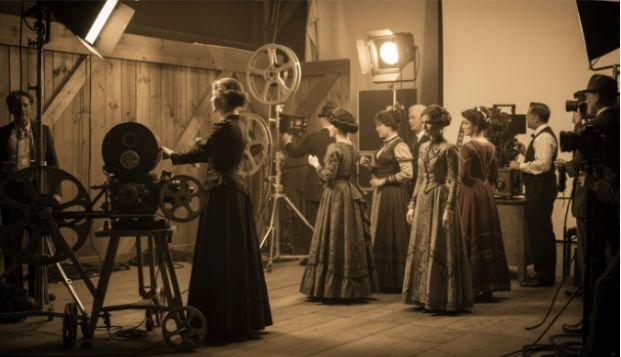
The first women filmmakers of the silent film era did not wait for Hollywood to grant them permission. They directed actors, designed effects, wrote scripts, managed studios, and shaped film language while the medium was still being invented.
When I revisited their surviving films, I used four lenses: authorship, ownership, technical innovation, and performance control. This reveals who helped define what movies could become.
Why These Silent-Era Women Matter
The first women filmmakers of the silent film era worked before directing became a rigid, prestige-heavy profession. Early production remained collaborative, and job titles were flexible. Women moved between acting, writing, directing, producing, editing, and company ownership. Columbia University’s Women Film Pioneers Project documents women working across nearly every level of global silent-film production.
Survival shapes reputation too. Film history often rewards what archives preserved, not everything audiences originally watched.
Quick Reference: Women Who Built Early Cinema
This table compares the first women filmmakers of the silent film era by location and lasting contribution.
| Filmmaker | Main base | Defining contribution |
| Alice Guy-Blaché | France and United States | Narrative filmmaking and Solax studio leadership |
| Lois Weber | United States | Social-issue cinema and studio ownership |
| Elvira Notari | Italy | Neapolitan realism and independent production |
| Mabel Normand | United States | Actor-led silent comedy direction |
| Helen Gardner | United States | Star-owned production company |
| Alla Nazimova | United States | Avant-garde production and creative control |
| Frances Marion | United States | Screenwriting, directing, and Oscar success |
| Dorothy Arzner | United States | Silent-to-sound directing innovation |
| Lotte Reiniger | Germany and Britain | Feature-length silhouette animation |
Alice Guy-Blaché and Lois Weber Changed Film Language
Alice Guy-Blaché Made Storytelling the Main Event
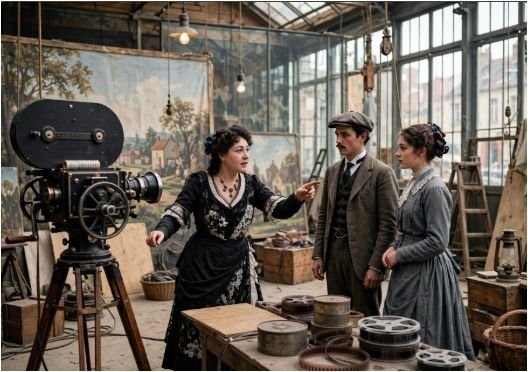
Any account of the first women filmmakers of the silent film era begins with Alice Guy-Blaché. The Library of Congress identifies her as the first woman director and one of the earliest filmmakers linked to narrative cinema. She worked at Gaumont, moved to the United States, and directed, wrote, produced, or supervised hundreds of films.
Guy-Blaché explored synchronized sound, hand coloring, effects, comedy, immigration, and gender-role reversals. Solax gave her unusual production and storytelling control.
Lois Weber Turned Film Into Social Argument
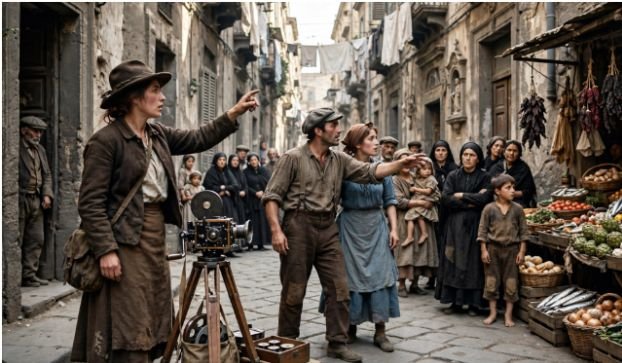
Lois Weber became early Hollywood’s leading woman director-screenwriter. Suspense showed her technical command, while Hypocrites and Where Are My Children? addressed religious hypocrisy, birth control, abortion, and social inequality.
Weber formed her own studio in 1917, allowing her to develop projects, choose themes, and control production.
Global Pioneers Expanded Cinema’s Range
Elvira Notari Filmed Life Beyond Polite Society
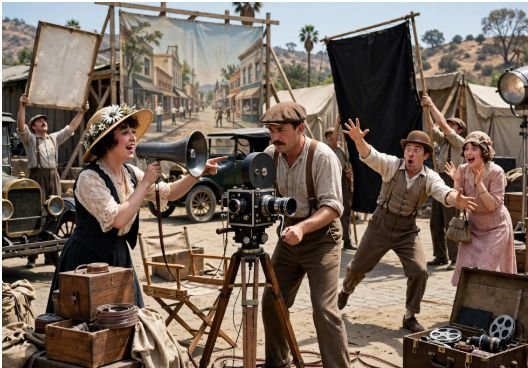
The first women filmmakers of the silent film era were not limited to France or Hollywood. Elvira Notari, recognized as Italy’s first and most prolific woman director, worked through her family-run Dora Film company in Naples. She focused on working-class streets, poverty, crime, local music, and women constrained by social rules.
Her real locations and nonprofessional performers anticipated later Italian realism. Few films survive, proving that surviving prints cannot measure influence alone.
Lotte Reiniger Built Animation by Hand
Lotte Reiniger cut articulated figures from paper and cardboard, then moved them frame by frame against illuminated backgrounds. Her 1926 film The Adventures of Prince Achmed is the oldest surviving animated feature. The earlier Argentine feature El Apóstol is lost, so “surviving” is the crucial word.
Her fusion of illustration, engineering, and movement proved animation could sustain a feature-length story.
Stars Who Claimed Creative Control
Several of the first women filmmakers of the silent film era used fame as leverage for authorship and ownership.
Mabel Normand Directed Comedy From the Inside
Mabel Normand wrote, directed, and starred in Mabel’s Blunder in 1914, now preserved in the US National Film Registry. Her acting experience sharpened its movement, timing, and physical comedy.
Normand’s career challenges the idea that creative authority must fit one title. She could lead a scene before the camera while controlling its rhythm behind it.
Helen Gardner and Alla Nazimova Built Their Own Power
Helen Gardner formed Helen Gardner Picture Players in 1912, then produced and starred in Cleopatra. She turned screen fame into independent ownership.
Alla Nazimova followed a more avant-garde path. She produced and starred in the stylized Salomé. However, the official directing credit belongs to Charles Bryant. Nazimova’s importance rests on production power and broad creative influence, not a simplified directing claim.
Readers exploring women horror directors and their best films will recognize the same enduring struggle over who receives credit for a movie’s vision.
Frances Marion and Dorothy Arzner Bridged Two Eras
The first women filmmakers of the silent film era also created routes into sound cinema.
Frances Marion directed silent films, but screenwriting became her strongest legacy. She later won for The Big House and became the first woman to receive an Academy Award for writing.
Dorothy Arzner began in editing and directed her first feature in 1927. During The Wild Party, she rigged a microphone to a fishing pole so Clara Bow could move freely. The solution became an early boom microphone.
Their careers carried silent-era skills and production knowledge into sound cinema.
Why Their Films and Credits Disappeared
As filmmaking grew expensive, studios consolidated authority. Women faced shrinking access to capital and decision-making, while lost films deepened their erasure.
The Library of Congress estimates that about 70 percent of American silent feature films are completely lost. When prints disappear, evidence of direction, performance, technique, and audience response disappears too.
I avoid measuring the first women filmmakers of the silent film era only by surviving masterpieces. Trade reports, company records, and restoration research reveal careers that prints cannot fully represent.
This explains why Alice Guy-Blaché, Lois Weber, and Mabel Normand can seem like surprising discoveries today. Their importance was clearer to many contemporary audiences than it became to later generations.
FAQs
1. Who was the first woman filmmaker in cinema history?
Alice Guy-Blaché is widely recognized as the first woman film director and one of cinema’s earliest narrative filmmakers.
2. Which silent-era women owned film studios?
Alice Guy-Blaché helped establish Solax, Lois Weber formed her studio, and Helen Gardner created an actor-owned production company.
3. Which silent films directed by women should beginners watch?
Start with Falling Leaves, Suspense, Mabel’s Blunder, Salomé, and The Adventures of Prince Achmed.
4. Why were the first women filmmakers of the silent film era forgotten?
Studio consolidation, gender bias, disputed credits, poor preservation, and widespread silent-film loss pushed major careers outside popular history.
The Credits Roll, but Their Influence Does Not
The first women filmmakers of the silent film era were directors, studio founders, comedians, animators, writers, editors, and technical problem-solvers. They did not stand at cinema’s edge. They helped power its invention.
Watch one surviving film before reading another ranking. Start with Falling Leaves or Mabel’s Blunder, then notice the framing, pace, performance, and control. These women become harder to erase once their work is seen.