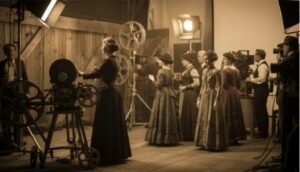
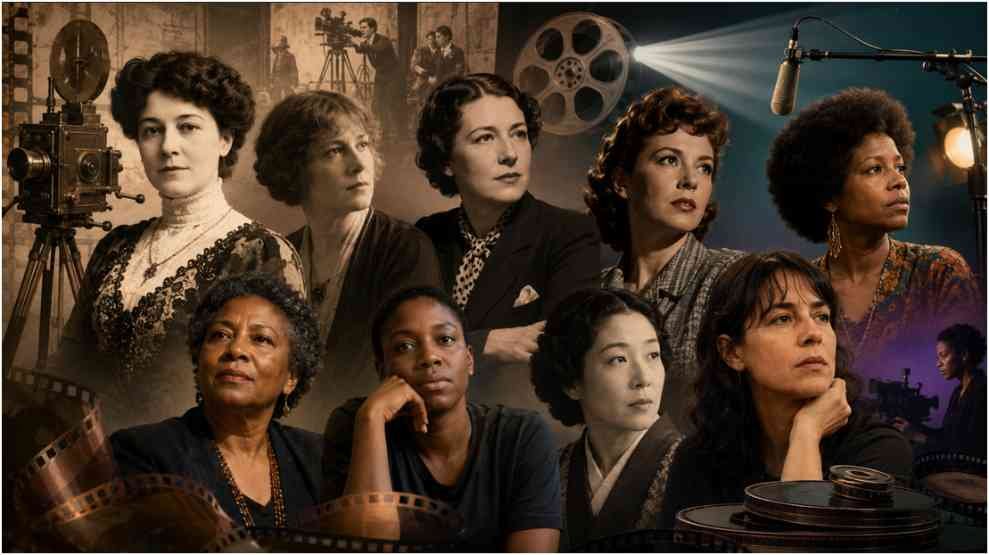
Some of cinema’s boldest techniques came from women whose credits faded, films vanished, or careers were blocked. When I study overlooked women directors in film history, I ask three questions: Who received credit? Who controlled production? Which films survived?
Those questions reveal more than forgotten names. They show how women helped invent cinema, then disappeared from the histories built around it.
Why Overlooked Women Directors in Film History Were Forgotten
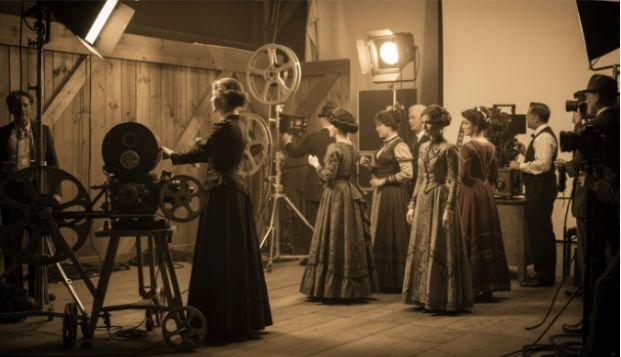
Women worked across silent cinema as directors, writers, editors, exhibitors, producers, camera operators, and studio owners. Columbia University’s Women Film Pioneers Project shows that their participation was broad rather than exceptional. From 1907 to around 1920, women held influential positions throughout the emerging American film industry.
I see three connected forms of erasure. Credit erasure transferred recognition to male collaborators. Access erasure restricted studio, union, and financing opportunities. Archive erasure left films lost, neglected, incomplete, or rarely screened.
Commercial expansion also changed who held power. As filmmaking became a larger business, male-owned studios increasingly pushed women away from directing and production leadership.
This explains why overlooked women directors in film history can seem unusual today, although women were active from cinema’s earliest years.
For a wider companion overview, read .
Silent-Era Women Filmmakers Who Built Cinema’s Language
Alice Guy-Blaché
Alice Guy-Blaché is widely recognized as cinema’s first woman director and one of its earliest narrative filmmakers. She experimented with staged stories, synchronized sound, color processes, and visual effects while cinema was still defining its grammar.
After moving to the United States, she became president of the Solax Company and worked as a director, writer, and producer. Her career proves that women shaped both film language and the business structures supporting it.
Lois Weber
Lois Weber joined formal invention with social criticism. In Suspense from 1913, a triangular split screen presents danger, fear, and rescue simultaneously. The technique creates urgency rather than serving as an empty visual trick.
Weber also addressed poverty, reproductive choice, religion, social inequality, and capital punishment. Her visual artistry consistently connected experimentation with the experiences of ordinary people, particularly women.
Suspense entered the National Film Registry in 2020, yet Weber remains less familiar than many male innovators of her period.
Adela Sequeyro
Mexican journalist and actor Adela Sequeyro moved into writing, editing, producing, and directing. Filmoteca UNAM identifies her as the first Mexican woman to direct, produce, write, edit, and star in a sound feature.
Her 1937 film La mujer de nadie questioned the gender stereotypes surrounding women at the time. Sequeyro also founded Producciones Carola, giving herself a production structure when established institutions offered limited access.
Her independence matters as much as her historical milestone. She did not wait for the industry to welcome her. She built another route into it.
Studio-Era Directors Who Worked Against the System
The sound era narrowed women’s opportunities inside commercial filmmaking. These women film directors who changed cinema history mastered recognizable genres while quietly rewriting their assumptions.
Dorothy Arzner
Dorothy Arzner directed more than 20 features and worked with Clara Bow, Katharine Hepburn, and Lucille Ball. She also contributed to numerous productions as a writer and editor.
During The Wild Party, Arzner reportedly attached a microphone to a fishing pole so Bow could move freely while speaking. The practical solution helped establish the boom microphone and freed actors from fixed recording positions.
Arzner’s importance extended beyond equipment. In Dance, Girl, Dance, a performer directly confronts spectators who treat women’s bodies as entertainment. The scene turns the objectifying gaze back toward the audience.
Ida Lupino
Ida Lupino used her established acting career to develop an independent filmmaking practice. Across eight directed features, she addressed subjects that larger studios often avoided.
Outrage examined the psychological consequences of sexual assault. Never Fear followed a dancer confronting polio, while The Bigamist resisted simple moral judgments about marriage and emotional responsibility.
I find Lupino’s production discipline especially instructive. She used lean budgets, location shooting, and noir-influenced tension to make difficult subjects commercially workable. Outrage entered the National Film Registry in 2020.
Kinuyo Tanaka
Kinuyo Tanaka was already one of Japan’s most celebrated screen actors when she moved into directing. Between 1953 and 1962, she directed six features centered on women’s interior lives.
Forever a Woman confronts cancer, desire, divorce, mortality, and artistic identity with unusual frankness. The Wandering Princess filters imperial history through a woman trapped within political forces beyond her control.
Tanaka did not simply place women at the center. She showed that private experience could carry immense historical and political weight.
Global and Avant-Garde Filmmakers Who Reframed the Screen
From the 1970s through the 1990s, overlooked women directors in film history challenged colonial storytelling, racial exclusion, heterosexual norms, and linear narrative form.
Sarah Maldoror
Sarah Maldoror connected filmmaking with anti-colonial resistance. Sambizanga follows Maria as she searches for her imprisoned husband during Angola’s struggle against Portuguese colonial rule.
By centering labor, grief, family, and women’s endurance, Maldoror refuses to reduce revolution to stories about armed men. MoMA describes Sambizanga as likely the first feature directed by a woman in sub-Saharan Africa.
Many of Maldoror’s works were once considered lost or politically destroyed. Their later recovery proves that preservation can become a second struggle over who controls history.
Julie Dash
Julie Dash’s Daughters of the Dust became the first feature-length film by an African American woman to receive a wide theatrical release.
Its layered voices, Gullah setting, nonlinear structure, and luminous imagery treat memory as something present and sensory. Dash rejects the standard historical drama built around one hero and a straightforward timeline.
The Library of Congress added the film to the National Film Registry in 2004. Its visual influence remains visible in contemporary fashion films, family sagas, music videos, and visual albums.
Cheryl Dunye
The Watermelon Woman blends romance, mockumentary, staged archives, and film criticism. Cheryl Dunye plays a filmmaker researching an uncredited Black actress who appeared in 1930s cinema.
The fictional investigation exposes a real archival problem. Marginalized people may appear on screen without having their names, relationships, or creative labor preserved. Dunye makes that missing evidence part of the film itself.
The film entered the National Film Registry in 2021, marking its cultural, historical, and aesthetic significance.
How to Watch Overlooked Women Directors in Film History
A list cannot repair the cinematic canon by itself. I use a three-step viewing test when revisiting these directors.
First, identify the craft. Watch Weber’s split screen, Arzner’s confrontation with spectatorship, Dash’s layered narration, or Dunye’s invented archive.
Next, examine the production barrier. Was the director working independently, outside a union, with limited funding, or beyond conventional distribution?
Finally, investigate the film’s afterlife. Was it widely released, preserved intact, rediscovered, reconstructed, or restored decades later?
This method moves beyond celebrating symbolic “firsts.” It reveals how technique, opportunity, distribution, and preservation determine whose work becomes accepted film history.
The Credits Are Long Overdue
The overlooked women directors in film history did not simply add female viewpoints to cinema. They developed techniques, founded companies, challenged genres, and changed how films represent memory, desire, race, labor, violence, and political struggle.
My recommended next step is simple: choose one film from each era. Start with Suspense, continue with Dance, Girl, Dance, and finish with Daughters of the Dust or The Watermelon Woman.
Watch them chronologically and track what each director changes. The cinematic canon looks very different once the missing credits return.
Frequently Asked Questions
1. Who was the first woman film director?
Alice Guy-Blaché is widely credited as the first woman filmmaker and one of cinema’s earliest narrative directors.
2. Why were early women filmmakers forgotten?
Unequal credit, studio consolidation, restricted financing, lost films, and limited archival preservation pushed many directors outside the accepted canon.
3. Which overlooked female directors should film students watch first?
Begin with Alice Guy-Blaché, Lois Weber, Dorothy Arzner, Ida Lupino, Kinuyo Tanaka, Sarah Maldoror, Julie Dash, and Cheryl Dunye.
4. Where can I find films by overlooked women directors in film history?
Check the Library of Congress, university film archives, museum retrospectives, specialist streaming collections, and film restoration programs.